
 English
 Français
 Deutsch
 Türkçe
 Svenska
 Norsk
Norsk
 Dansk
Dansk
 Suomi
Suomi
 Русский
 Polski


What Is a TIE Card in Spain and What Is It Used For?
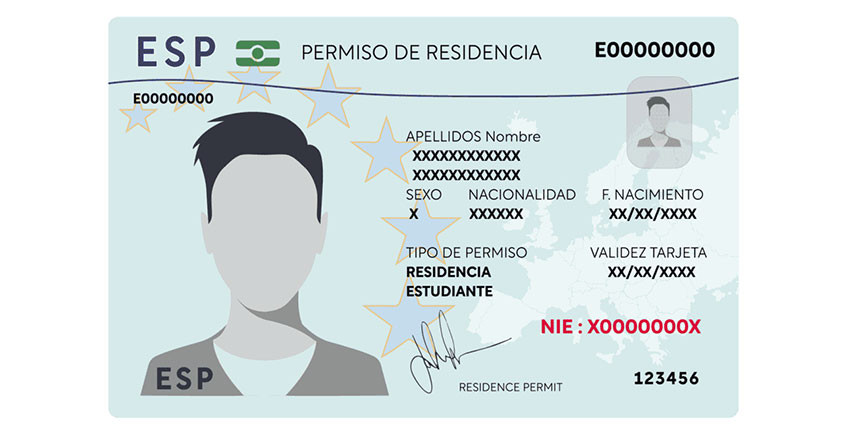
The TIE, or Tarjeta de Identidad de Extranjero, is a physical identity card for foreign nationals in Spain. It confirms that a person has a recognised right to stay in the country under a specific immigration route. The card does not replace a passport and does not give the right to live in Spain by itself. First, the person must receive an approved status, such as residence, a study stay, a work permit, or family-based residence. The TIE is issued afterwards as official proof of that right.
The TIE card shows the holder’s personal details, photo, NIE, type of permit, validity period, and the reason for staying in Spain. Spanish authorities use it to confirm a foreign national’s administrative position in the country.
For foreign buyers, the TIE usually becomes important after the purchase rather than during the transaction itself. If the property purchase is connected with relocation, long-term living, health insurance, children’s education, or renewal of residence, the TIE becomes one of the key documents for everyday life in Spain.
What Is the Difference Between NIE and TIE in Spain?
Because both documents are essential, many foreign buyers get confused between them. They often receive an NIE for a property purchase and assume it is the first step toward residence. In fact, they serve entirely different purposes.
|
Feature |
NIE (Número de Identidad de Extranjero) |
TIE (Tarjeta de Identidad de Extranjero) |
|
What is it? |
A unique foreigner identification number. |
A physical residence card. |
|
Main Purpose |
Property purchases, taxes, banking, notarial deeds. |
Proof of an approved legal residence or long-term stay. |
|
Validity |
Permanent (the number never changes). |
Temporary (expires and must be renewed). |
For a buyer, the usual order is clear: first, you obtain the NIE for legal and financial procedures. Then, if you have a valid basis for relocation, you secure your residence status and apply for the TIE.
Who Needs a TIE Card in Spain?
A TIE card is required for citizens of countries outside the EU, EEA, and Switzerland if they have the right to stay in Spain for longer than the standard short-term period. This typically applies to holders of long-term visas (such as the Golden Visa or Non-Lucrative Visa), international students, employees, entrepreneurs, and applicants for family reunification.
It is important to note that EU citizens do not apply for a TIE. They register as EU citizens and receive a green registration certificate. Family members of EU citizens who are not EU nationals follow a separate procedure, which should not be confused with the standard TIE process.
How to Apply for a TIE Card
The TIE application is submitted in person in Spain. This usually happens after entering the country with a long-term visa or after receiving a positive residence decision from inside Spain.
The first step is to book an appointment through the Cita Previa de Extranjería (the official online appointment booking system for Spanish immigration). You must select the appointment category carefully—whether it’s for a first card, fingerprinting after a positive decision, or a renewal. If the wrong category is selected, your documents may not be accepted.
At the appointment, the key step is the toma de huellas (the biometric fingerprinting process). The police will check your passport, the basis for the card, the application form, and your address details. After processing, you receive a confirmation receipt and will return several weeks later to collect the physical card.
Documents Required for a TIE Card Application
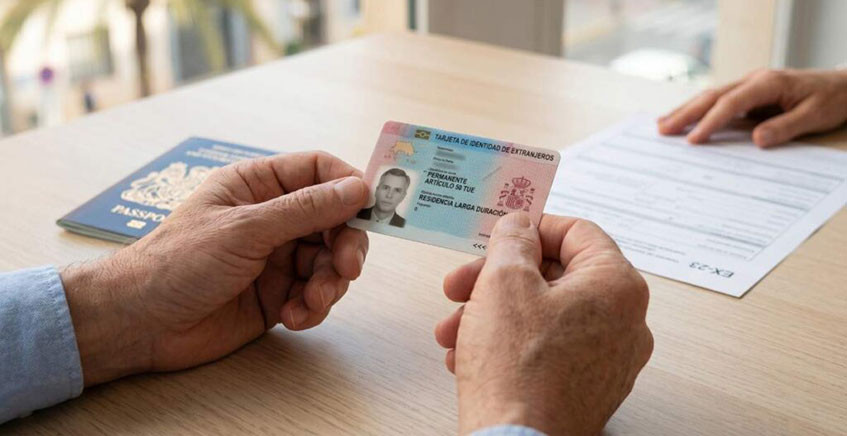
While the exact document list can vary slightly by province and the type of permit, a standard application file is quite consistent. You will need the official EX-17 form (the standard Spanish application form for the foreigner identity card), your valid passport (original and copies), proof of your approved visa or residence permit, a recent Spanish passport-sized photograph, and your appointment confirmation.
Additionally, you must provide proof that you have paid the required government fee, which is done using the Modelo 790 Código 012 tax form (the standard document used to pay police and immigration administrative fees). In many cases, officials will also ask for a certificado de empadronamiento (an official certificate from the local town hall proving your registered address in Spain) to confirm your residence. For property owners, it is crucial that the address used by the bank, notary, tax office, and immigration office matches to avoid unnecessary questions.
Common Problems and How to Avoid Them
The most frequent hurdle is a simple lack of available appointments, especially in popular coastal provinces with a high volume of foreign residents. The best approach is to start monitoring the system early and ensure you know exactly which procedure you are booking.
Another common issue is paying the wrong government fee. The aforementioned Modelo 790 Código 012 covers several different procedures, and your payment must match your exact case (issuing a first card versus renewing one).
Furthermore, treating the property purchase and residence as the same process often leads to mistakes. Preparing documents only for the notary leaves a gap for your future residence needs, so address registration and legal status planning should be handled as a separate, subsequent project.
TIE Card Renewal Process
Renewing a TIE does not start with the plastic card; it starts with renewing the underlying permit behind it. Only after you receive a positive decision on your visa or residence extension can a new card be issued.
For property owners who split their time between two countries, this is a highly practical issue. An expired card can complicate banking, rental matters, insurance, and travel. If the permit itself is not renewed within the required legal window, you risk losing your legal basis to stay in Spain entirely.
Rights and Obligations of TIE Card Holders
Your TIE confirms your right to stay in Spain under specific conditions. If your permit allows work, this will be explicitly stated on the card. As a holder, you are obligated to keep your information up to date; if your address, family circumstances, or passport details change, the authorities must be notified.
Remember that the TIE does not replace a passport for international travel. It confirms your legal status within Spain, but your passport remains your primary travel document when crossing borders.
Plan Your TIE and Property Purchase in Spain with the Right Support
A smooth property purchase in Spain does not end at the notary. For many foreign buyers, the next steps — NIE, banking documents, address registration, residence planning, and the TIE card — are just as important as the transaction itself.
Since 2004, TERRA Real Estate has been helping international buyers navigate Spanish property purchases with clear guidance and local support. When you buy property with us, our team helps you understand exactly which documents are needed for the transaction and how to organize your move into Spanish property ownership.
Ready to find your dream home in Spain? Contact TERRA Real Estate today to browse properties and start your relocation journey.
Frequently Asked Questions About the TIE Card
Q: How can I check the status of my TIE in Spain?
A: You can check the status of your file through the electronic Extranjería system using your NIE or expediente number. This is especially useful while waiting for a renewal approval.
Q: How do I change my NIE into a TIE in Spain?
A: You do not change an NIE into a TIE. The NIE is your permanent identification number. The TIE is the physical card issued later, which will have your NIE printed on it.
Q: Do I automatically get a NIE with a visa?
A: Not always. In some procedures (such as certain long-term visas), the NIE is assigned automatically and printed directly on your visa sticker. If the number is not shown on your visa, it must be requested separately.
Q: Do I need a TIE card in Spain?
A: Yes, if you are a non-EU citizen who has been granted the right to stay in Spain for longer than a standard tourist visit.
Q: How do I book a TIE appointment and what documents are needed?
A: Appointments are booked online through the Cita Previa de Extranjería system. The standard required documents include the EX-17 form, your passport, proof of your approved visa or legal status, a recent passport-sized photograph, proof of payment of the government fee (Modelo 790 Código 012), and often a certificado de empadronamiento (proof of address).
Q: How much does a TIE card cost in Spain?
A: The cost depends on the specific procedure (first card, renewal, duplicate) and is paid via the Modelo 790 Código 012 tax form before your appointment.
Q: Can I travel around Spain with my TIE card?
A: Within Spain, the TIE confirms your resident status. However, for international travel, your passport is required.
Q: What happens if I do not renew my TIE card in Spain?
A: If the permit itself is not renewed on time, you may lose your legal basis to stay in Spain. If the permit is renewed but you haven't updated the card, you may face difficulties with banks and administrative procedures.
Q: Can I leave Spain while waiting to receive my TIE card?
A: Yes, but if your card has expired or the renewal process is still ongoing, you will need an autorización de regreso (a temporary re-entry permit) to return to Spain smoothly.
Q: How long does it take to receive a TIE card?
A: After the fingerprinting appointment, the card is usually ready to be collected within 3 to 4 weeks, depending on the province.
Sources:
- Tarjeta de Identidad de Extranjero (TIE) / Ministerio del Interior — Foreigner Identity Card (TIE) / Ministry of the Interior
- Tarjeta Inicial o Renovación / Sede Electrónica de la Policía Nacional — Initial Card or Renewal / National Police Electronic Office
- Modelos de Solicitud / Ministerio de Inclusión, Seguridad Social y Migraciones — Application Forms / Ministry of Inclusion, Social Security and Migration