











Understanding the Difference Between Costa del Sol and Costa Blanca
Costa del Sol and Costa Blanca are often seen as similar coastal destinations, but for buyers comparing property in Spain, they represent two very different real estate markets. The difference is not only about price. It is about how property ownership works in real life: what buyers actually pay for, how predictable ongoing expenses are, and how easy it is to resell or rent the property later.
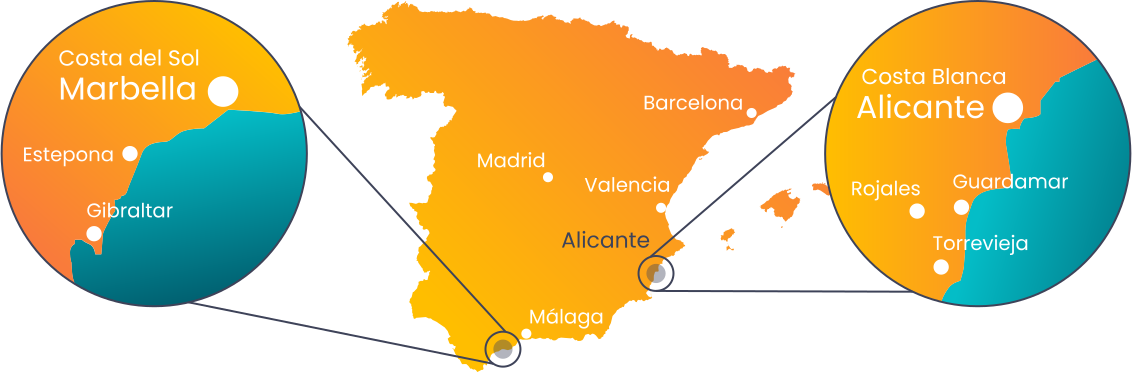
Costa del Sol is located in southern Spain, in the province of Málaga, which belongs to the Andalusia region. Costa Blanca runs along Spain’s eastern coast in the province of Alicante, part of the Valencian Community. This geographic difference affects how each market is built, how dense development is, and how buyers behave within the Spain property market.
The speed of transactions is also different. On Costa del Sol, well-located properties in established areas usually sell quickly because supply is limited. On Costa Blanca, buyers typically have more time for negotiations, inspections, and careful checks before making a decision.
A common mistake made by foreign buyers is to treat both regions as holiday markets. Property in Spain is a long-term asset. A proper comparison should focus on how the property will be used, how ownership costs will be managed over time, and how much extra the buyer is willing to pay for location and infrastructure.
Market Dynamics for Property in Costa del Sol
The market for property in Costa del Sol is driven by steady international demand and limited supply in prime locations. Prices are influenced less by regional averages and more by specific factors such as distance to the sea, views, access, surrounding development, and construction quality.
When the market adjusts, it usually happens through longer selling periods rather than sharp price drops. For long-term buyers, this means property values tend to be preserved instead of suddenly reduced.
The premium segment remains active, but buyer expectations are high. Buyers pay close attention to construction quality, apartment layouts, noise levels, access, parking, security, and building management. Even small shortcomings can affect resale potential. The developer’s reputation and how the building has been managed over time are especially important in the secondary market.
Rental strategies on Costa del Sol often focus on short-term and medium-term rentals. Seasonal income can be strong, but final results depend on realistic occupancy levels, licensing rules, management costs, and competition. Properties with practical layouts and predictable running costs usually perform more reliably than visually impressive but difficult-to-manage units.

Market Dynamics for Property in Costa Blanca
Property in Costa Blanca offers a lower and more predictable entry level for buyers. Prices are mainly shaped by practical factors such as construction quality, access, neighbourhood infrastructure, and distance to the sea, rather than prestige.
Prices generally change more gradually, which reduces the risk of overpaying and allows more room for negotiation. Capital growth is usually slower than in prime areas of Costa del Sol, but ownership risks are also lower.
Rental demand on Costa Blanca is more stable over the long term. Many tenants rent for seasons or full years, which makes long-term rentals easier to manage and less dependent on tourism cycles.
Lifestyle and Everyday Infrastructure: Costa del Sol vs Costa Blanca
Lifestyle differences reflect how each market is structured.
Costa del Sol suits buyers who need dense, international-level infrastructure near the sea. Málaga Airport, private healthcare, international schools, and short travel distances support year-round living and smooth relocation. This level of convenience comes with higher ongoing costs.
Costa Blanca offers a calmer and more predictable living environment. Alicante provides full city infrastructure and an international airport, while many coastal towns are built around permanent residents rather than seasonal tourism. For buyers planning long stays or permanent living, this often means lower costs and fewer seasonal limitations.
Value for Money: Which Coast Delivers Better Outcomes?
When comparing property in Costa Blanca with property in Costa del Sol, value for money depends mainly on the buyer’s priorities.
Costa Blanca is suitable for buyers who focus on space, controlled expenses, and long-term usability. With the same budget, buyers can usually purchase a larger property and keep recurring costs lower.
Costa del Sol is better suited for buyers who value liquidity, international services, and established infrastructure. Buyers pay a premium for convenience and stronger resale potential, but ownership costs are higher and should be calculated carefully in advance.
The most practical approach is to compare both regions based on purchase budget, annual ownership costs, rental plans, and resale expectations.
Key Buyer Locations on Costa del Sol
Demand is concentrated in Marbella, Benahavís, and parts of Estepona, where prices reflect limited supply and strong resale liquidity. Careful due diligence is essential, as projects that look similar can differ greatly in running costs and resale performance.
Málaga offers an urban alternative with year-round demand and strong transport connections. Success in this market depends more on layout, access, and building quality than on sea views alone.
Fuengirola, Benalmádena, and Mijas attract buyers looking for a balance between price and infrastructure, where the exact micro-location plays a key role in long-term liquidity.
Key Buyer Locations on Costa Blanca
On Costa Blanca, choosing the right town is especially important.
Alicante is suitable for buyers who want city infrastructure, easy airport access, and year-round living without dependence on resort tourism.
Benidorm attracts buyers focused on rental income, but results depend mainly on building quality, access, and management rather than promotional marketing.
Northern Costa Blanca, including Jávea, Moraira, and Dénia, appeals to buyers looking for a quieter residential environment with strong long-term liveability.
Still Deciding? Get a Personalised Property Strategy for Spain
Licensed real estate agency TERRA Real Estate has been working with foreign property buyers since 2004, supporting clients who plan to buy property in Spain, including property in Costa del Sol and property in Costa Blanca. We help clients evaluate purchase budgets, ownership costs, legal and technical risks, rental potential, and resale liquidity across Spain’s coastal regions. Based on this analysis, we recommend specific locations and properties aligned with each buyer’s goals and long-term plans.