











Understanding Dubai: Culture and Lifestyle
Culturally, Dubai is often described as a meeting point between East and West, but this description is misleading. In practice, the city operates as a managed international platform. The state defines the regulatory environment, the private sector delivers services within those limits, and residents function inside a clearly outlined framework.
Public space plays a limited role. Most daily life unfolds in private settings such as residential developments, office environments, shopping centres, and gated communities. Because of this, the quality of real estate in Dubai carries exceptional weight: weaknesses in construction or management are felt quickly, often more sharply than in European cities.
There is also a psychological dimension that should not be underestimated. Dubai is not built around slow rhythms or lifestyle spontaneity. It suits those who are comfortable operating within structured systems where processes move quickly but require ongoing financial discipline. The reason is rarely climate; more often, it is a mismatch between expectations and the city’s operating logic.
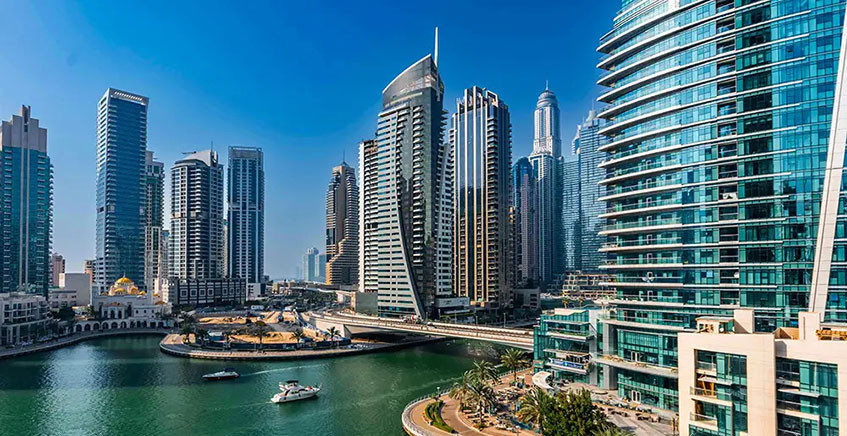
Best Areas to Live in Dubai
When buying property in Dubai, selecting a residential area by name alone rarely works out. What matters is not the label of the district, but the type of development, the quality of the specific building, and the lifestyle it realistically supports.
Downtown Dubai and Business Bay attract buyers who prioritise proximity to business activity and liquidity. These areas work well for professionals and investors who prefer an intensive urban environment. However, they come with higher density, persistent traffic, noise, and elevated service charges.
Dubai Marina and Jumeirah Beach Residence (JBR) are often associated with waterfront living, yet they show some of the sharpest contrasts in quality. One building may offer reliable management and consistent service standards, while a neighbouring property struggles with noise, lift reliability, or operational issues.
Dubai Hills Estate, Town Square, Jumeirah Village Circle (JVC), and MBR City are oriented toward long-term residential use. Access to schools, green spaces, practical layouts, and manageable service charges becomes more important than branding. These districts are typically chosen by residents planning to live in Dubai for five to ten years.
Visa and Residency Requirements
Available Visa Types
Residency in Dubai is tied to economic function rather than to an inherent right to live in the country.
A work visa suits employed professionals but creates direct dependence on the employer. If employment ends, legal status must be changed within a limited timeframe.
An investor visa, obtained through business ownership or property purchase, offers greater autonomy; however, it remains conditional on maintaining the defined financial requirements.
The Golden Visa provides the highest level of stability, although access is limited and typically requires either substantial investment or a recognised professional profile.
In all cases, a visa should not be confused with permanent residence. It is a conditional permission that remains valid only as long as its underlying criteria are met.
For reference:
As of 2026, a property-based investor residence in Dubai requires a minimum registered property value of AED 750,000, while the Golden Visa through property ownership applies from AED 2,000,000 (according to the Dubai Land Department).
In the event of cancellation or expiry of a Dubai-issued residence visa, a standard 60-day grace period applies, as regulated by GDRFA Dubai and outlined in the official UAE government guidance.
Residency Rules You Need to Know
Dubai does not operate on automatic resident rights. Legal status is always linked to a specific basis, such as employment, business activity, investment, or property ownership. If that basis disappears, the resident has a limited period to either change status or leave the country.
Financial infrastructure is closely tied to residency status. Bank accounts, credit facilities, and long-term service contracts depend on an active visa and a valid Emirates ID. When a visa expires or is cancelled, access to financial accounts may be temporarily restricted until the situation is resolved.
Health insurance requires equally careful attention. While coverage is mandatory in principle, the quality and scope of policies vary significantly. Employer-provided insurance is often basic and may exclude treatment in leading clinics, complex procedures, or chronic conditions.
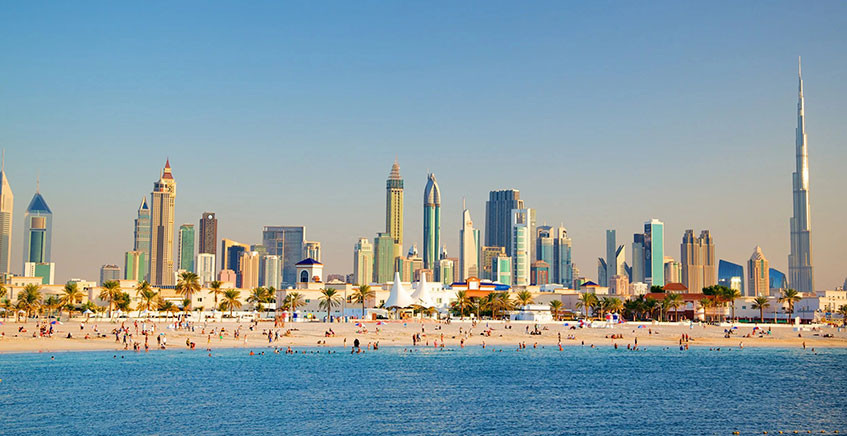
Cost of Living in Dubai (2026): Realistic Monthly Ranges
The cost of living in Dubai is defined less by a single monthly figure and more by the structure of mandatory expenses. The city does not scale down easily, and below a certain threshold, daily life becomes impractical.
Typical Monthly Living Costs in Dubai (AED) — Updated January 2026
|
Category |
Realistic Range |
|
Rent, 1-bedroom (non-central) |
5,500 – 7,500 |
|
Rent, 1-bedroom (central areas) |
8,000 – 10,500 |
|
Utilities and cooling |
600 – 1,200 |
|
Internet and mobile |
450 – 650 |
|
Groceries and basic spending |
1,800 – 3,200 |
|
Transport |
350 – 900 |
|
Health insurance |
700 – 1,600 |
|
Private school (monthly equivalent) |
1,500 – 8,000 |
Ranges vary by building quality, management fees, and contract terms.
Transport: Getting Around the City
Although Dubai has public transport, the city is fundamentally designed around car use. The metro is efficient, but only along limited routes. For families and property owners, a car is usually unavoidable.
Fuel prices are moderate, but additional costs accumulate over time, including parking, tolls, insurance, and maintenance. When choosing a location, travel time matters more than distance. Ten kilometres can mean either twenty minutes or more than an hour, and that difference has a direct impact on daily quality of life.
Buying Property in Dubai as a Foreigner
Foreign ownership in Dubai’s freehold zones is a clear advantage, but it is often perceived as simpler than it actually is. The key considerations usually lie in the practical and financial aspects of ownership rather than in title security.
Service charges deserve particular attention. These annual fees cover building maintenance and shared infrastructure, and they can vary noticeably between projects and change over time. A lower purchase price in a poorly managed complex can lead to higher long-term costs.
The role of the management company is equally important. In Dubai, the condition of a building several years after completion depends largely on how it is managed, not on the original developer. Maintenance of common areas, technical systems, parking, and security is determined by management quality, and correcting a poor choice later is often difficult.
Rental rules should also be reviewed carefully. Even if a district allows short-term rentals, individual buildings may impose restrictions. Licensing, registration, and operating costs are part of the process and should be considered alongside projected rental income.
Property ownership does not automatically provide residency. A property-based visa is available only when specific value thresholds and registration requirements are met, which is important to clarify in advance.
Dubai’s real estate market places strong emphasis on asset quality. Well-chosen properties tend to remain relevant, while weaker ones lose appeal more quickly. For this reason, a purchase decision is best guided by its intended purpose—whether for living, rental income, or a visa strategy—rather than by price alone.
Thinking About Moving to Dubai? Let’s Talk
Licensed real estate agency TERRA Real Estate has been working with foreign property buyers since 2004, supporting clients who approach relocation and property purchase in Dubai as a calculated decision. Our work is built around this logic: we assess living budgets, analyse visa scenarios, select areas and properties aligned with real lifestyles, and manage transactions so ownership remains a practical solution rather than a recurring source of problems.