




What Happens to a Property in Turkey When Its Owner Dies?
If you own property in Turkey, it helps to know what your family would need to do after your death. A will can set out your wishes, but it does not necessarily remove the rights that Turkish law protects for close relatives. The applicable law, family circumstances and assets all affect the outcome.
The first practical step is usually to establish who the heirs are and obtain an inheritance certificate. Identifying the estate, dealing with debts, registering inherited property and filing tax returns are separate tasks. A cross-border estate may also need work in the deceased’s home country.
What Belongs to the Estate?
An estate includes assets as well as liabilities. Before discussing who receives what, the family needs a reliable picture of what the deceased owned and owed.
Money: Bank deposits, cash and other financial assets form part of the estate, subject to the rules governing each asset.
Property and belongings: Homes and land are immovable property. Vehicles, household possessions and business interests are different kinds of assets and should be recorded separately.
Receivables: Money owed to the deceased may also belong to the estate. Loans and other debts owed by the deceased must be considered too.
Which Rules Apply to Foreign Owners?
Foreign nationals can inherit property in Turkey. Under Turkey’s private international law, succession generally follows the deceased’s national law, while immovable property situated in Turkey is governed by Turkish law. Rules on acquiring and holding property may still affect an heir’s ability to retain a particular asset; nationality alone is not a reason to assume inheritance is impossible.
A will made abroad may be relevant, but its form, applicable law and the Turkish procedures for giving it effect need individual review. An apostille, where required, authenticates a document; it does not by itself establish inheritance rights or transfer a title deed.
Who Can Inherit?
Where Turkish succession rules apply, relatives may inherit by law and other beneficiaries may receive assets under a valid will. The freedom to dispose of an estate is limited by certain heirs’ protected shares.
A will can benefit individuals or, where legally permitted, organisations. Its validity and the beneficiary’s entitlement still need to be assessed under the applicable rules.
If there are no qualifying heirs or effective testamentary beneficiaries, the state is the ultimate statutory heir. There is no general rule that every unclaimed foreign-owned home becomes state property after five or fifteen years.
An inheritance certificate establishes heirship; it does not by itself complete the registration of an inherited home.
 How Is the Estate Divided?
The percentages below concern different things: a statutory share is the entitlement under the legal order of succession; a reserved share is the protected part of that entitlement. Estate debts and any claims arising from the matrimonial property regime must be addressed before the distributable estate is calculated.
- Descendants: the reserved share is half of their statutory entitlement.
- Surviving spouse: the full statutory share is protected when inheriting with descendants or the parents’ line; otherwise, three quarters of the statutory share is protected.
- Each parent: the reserved share is one quarter of that parent’s statutory entitlement.
A child conceived before the death can inherit if subsequently born alive.
Without a valid disposition changing the outcome, the statutory order determines which relatives inherit. A surviving spouse’s share depends on the relatives with whom the spouse inherits:
- Spouse and descendants: the spouse receives one quarter; descendants share the remaining three quarters by the applicable branches.
- Descendants without a surviving spouse: they inherit through equal family branches, with representation where a descendant has died.
- Spouse and the parents’ line: the spouse receives one half; the other half passes through that line.
- Spouse and qualifying grandparents or their children: the spouse receives three quarters. If none of the relatives qualifying alongside the spouse exists, the spouse receives the whole estate.
- Adopted children and their descendants inherit from the adoptive parent like blood descendants. Foster care alone does not create the same right.
The family tree matters. If a child or parent has already died, that person’s descendants may take their place under the relevant branch of succession. A lawyer can establish the correct shares where several generations or earlier marriages are involved.
When Can an Heir Lose or Refuse an Inheritance?
Turkish law distinguishes being legally unworthy to inherit from disinheritance through a valid testamentary disposition. The grounds are specific; a family disagreement alone does not remove someone’s rights.
- Intentionally and unlawfully killing or attempting to kill the deceased.
- Intentionally and unlawfully making the deceased permanently incapable of making a testamentary disposition.
- Using fraud, coercion or threats to procure, revoke or prevent a testamentary disposition.
- Intentionally and unlawfully destroying or concealing a will when it cannot be restored.
- Disinheritance is a separate matter: a valid disposition and statutory grounds, such as a serious offence or serious breach of family duties, are required.
An heir may also reject an inheritance. Where Turkish rejection rules apply, the ordinary period is three months, but the starting point depends on the kind of heir and when the relevant facts or notification became known. If debts may exceed assets, seek advice promptly before taking steps that could affect the right to reject.
How Do Heirs Claim Their Inheritance?
Registration matters: A private agreement between heirs does not replace the formalities required for land-registry transactions.
Start with the death certificate, family records and information about the assets. Foreign documents may need legalisation or an apostille and an accepted Turkish translation, depending on their origin and the procedure.
An inheritance certificate may be issued by a competent Turkish court or, where legally available, a notary. Foreign-national cases often require court involvement. A certificate issued abroad may need recognition or other acceptance procedures in Turkey.
For a home or plot of land, heirs then apply for registration at the land registry. The certificate, identity documents and any representation papers must be suitable for that transaction. A court partition case is not automatically necessary for every uncontested estate.
Documents for an Inherited Property Transfer
The land registry will confirm the file for the particular property. Documents commonly requested include:
- An acceptable inheritance certificate, with any required recognition and translation.
- Identity documents or passports and the relevant Turkish tax numbers.
- Property information, the requested municipal value record and compulsory earthquake insurance where applicable.
- Any power of attorney and additional papers required for the particular application.

Inheritance Tax in Turkey
Inheritance tax is separate from the annual property tax charged on a home. Liability depends on the assets and the people involved; foreign nationality does not create a blanket exemption. Tax is normally payable over three years in six instalments, in May and November. The return itself has a different deadline, which depends in part on where the death occurred and where the heirs are located.
For 2026, the standard inheritance-tax bands below apply progressively to each heir’s taxable acquisition after the relevant exemptions, rather than as one rate on the whole property. Special regimes may change the result, so confirm the applicable treatment with the tax office. Our guide to property taxes in Turkey explains the other taxes owners may encounter.
- First TRY 3,000,000: 1%.
- Next TRY 7,000,000: 3%.
- Next TRY 15,000,000: 5%.
- Next TRY 30,000,000: 7%.
- Amount above a total taxable base of TRY 55,000,000: 10%.
Can a Foreign Owner Make a Will in Turkey?
Yes. Under Turkish law, making a will requires the capacity to understand the act and a minimum age of fifteen. Which law governs a foreign owner’s will and its effect on assets in different countries should be checked before it is signed.
For an official will, the usual stages are:
- Clarify the wishes, family circumstances, assets and applicable-law questions.
- Arrange an authorised official and two eligible witnesses; use a qualified interpreter where needed.
- Complete the declaration, reading and signature formalities for the chosen official form.
- Confirm where the original will be kept and how it can be located after death.
A will can be changed or revoked in accordance with the legal formalities. Review earlier wills with your adviser so that a new document does not unintentionally conflict with arrangements made elsewhere.
A notary or other authorised official will explain which papers are needed. The following may be requested, depending on the circumstances:
- Passport and any translation required by the official.
- Identity details and any requested tax number.
- Details of the property or other assets mentioned in the will.
- Beneficiary and family information needed to identify the intended recipients.
- Photographs, if requested; there is no universal three-photo rule for every will.
- Evidence of testamentary capacity, including a medical report if the official considers it necessary.
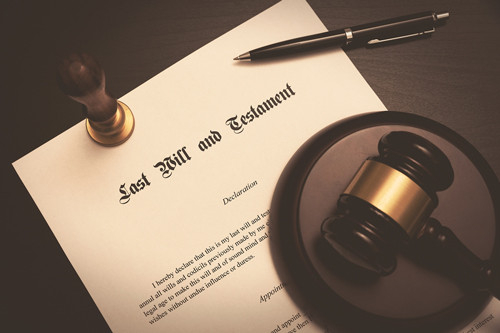 The Different Ways to Make a Will
A will does not automatically override reserved shares. For a family with assets in several countries, coordinated advice is more useful than assuming that one document will have the same effect everywhere.
Turkish law recognises three forms of will, each with its own conditions:
- Official will: prepared through an authorised official with two eligible witnesses and the prescribed formalities.
- Handwritten will: written entirely in the testator’s own hand, dated with day, month and year, and signed.
- Oral will: reserved for exceptional circumstances preventing the other forms, with strict witness and recording requirements.
Any later change must satisfy the applicable requirements. Keep advisers informed about existing wills and ensure the originals can be found when needed.
If a Foreign National Dies in Turkey
The place of death does not, on its own, decide which law governs every asset. The family should first obtain the death record, establish heirship and identify the property and liabilities in each country.
Turkish immovable property remains subject to the Turkish succession rule described above. Bank assets and other movable property may raise different applicable-law and jurisdiction questions.
Tax declarations and title registration need to be coordinated, but they are not the same procedure. Inherited property can generally be registered before inheritance tax is fully assessed or paid; a later sale or encumbrance can require tax clearance.
Questions About Inheritance in Turkey
Do heirs need an inheritance certificate?
Answer: It is normally the key document for establishing the heirs and their shares when dealing with the land registry or banks. The acceptable issuing authority and any recognition requirements depend on the case.
How can inherited money be released?
Answer: Contact the bank with the inheritance documents and ask for its estate procedure. Identity, representation and tax requirements must be satisfied before payment.
The bank may require tax clearance or apply the withholding procedure provided by law. An inheritance certificate alone does not guarantee immediate access to an account.
What if there are no heirs?
Answer: Where Turkish succession law applies and there are no qualifying private heirs, the state inherits. This should not be confused with a fixed waiting period for an unclaimed home.
Where should a family start?
Answer: Gather the death and family records, identify assets and debts, and obtain advice on the inheritance certificate and any foreign-document requirements.
Is a tax return needed if no tax is payable?
Answer: An inheritance within the scope of Turkish inheritance tax generally still has to be declared even when an exemption removes the tax due.
Do foreign heirs pay inheritance tax?
Answer: Assets in Turkey can fall within Turkish inheritance tax regardless of an heir’s nationality. Exemptions, treaty provisions and any special regime need to be checked for the individual estate.
Thinking About Selling an Inherited Home?
TERRA Real Estate ® is a licensed real estate company operating since 2004, holding the Official Authorization Certificate for Real Estate Transactions issued and supervised by the Turkish Ministry of Commerce. If you are considering selling an inherited home, we can discuss its location, condition and the practical steps for marketing it. Questions about heirship, wills and tax should be settled with the appropriate legal and tax professionals.
Call us on +90 242 512 25 00, use WhatsApp on +90 532 341 67 54 (@terrarealestate), or send us a message. If you are already in the area, we can arrange a free, no-obligation property visit and pick you up by appointment.